

AI is changing the way business is transforming the way people relate with technology and the way decisions are made in various industries such as voice assistants and systems to self-driving cars and medical diagnostics. AI is no longer a futuristic concept, AI is a practical, useful and applicable technology with which every life is currently shaping a new dimension of the future.
This article describes the concept of artificial intelligence, outlines the various forms of AI, gives practical examples, and outlines the possible uses of AI across industries.
What Is Artificial Intelligence?
Artificial Intelligence is the ability of machines and computer systems to perform tasks that normally require human intelligence. Some of these tasks involve learning through data, pattern recognition, natural language understanding, problem solving and decision-making.
At its core, AI combines computer science, data, algorithms, and machine learning to simulate human cognitive functions. In comparison to conventional software, which is directed by a set of established guidelines, AI systems have the capability to adjust, enhance, and advance with the experience gained over time.
Key Capabilities of Artificial Intelligence
- Data learning (Machine Learning).
- Logical thinking and critical analysis.
- Syllable recognition and word comprehension.
- Computer vision Visual perception (computer vision)
- Decision-making with minimal human intervention
Types of Artificial Intelligence
Artificial Intelligence may also be categorized in various ways according to the capability and functionality.
1. Narrow AI (Weak AI)
Narrow AI is made to execute a particular job or a small set of jobs. It is only guided by the set parameters and cannot think beyond its function.
Examples of Narrow AI:
- Voice-assistants such as Siri and Alexa.
- Recommended systems in Netflix and Amazon.
- Spam email filters
- Facial recognition software
The majority of AI applications now are of this type.
2. General AI (Strong AI)
General AI can be described as a form of AI that is theoretically capable of perceiving, learning and using intelligence in a broad range of tasks, such as the intelligence of humans.
Key characteristics of General AI:
- Rationality and abstract thinking.
- Transfer knowledge between different tasks
- Self-directed learning in the absence of task-specific programming.
As it is, General AI is not a current reality and is an ambition in the future.
3. Super Artificial Intelligence
Super AI is a hypothetical level in which AI is much smarter than humans in all aspects, such as creativity, emotional intelligence, and decision making.
Although it is mentioned in many studies and works of science fiction, Super AI has significant ethical, safety, and governance implications and is not yet a reality.
Core Technologies Behind Artificial Intelligence
A number of technologies form the basis of AI:
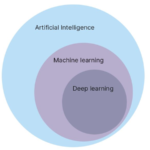
- Machine Learning (ML): Enables systems to learn from data and improve performance over time.
- Deep Learning: This is a branch of machine learning that applies neural networks based on the human brain.
- Natural Language Processing (NLP): Allows AI to understand and generate human language.
- Computer Vision: Enables machines to interpret and analyze visual data like images and videos.
- Robotics: A hybrid between AI and physical machines and automation.
Real-World Examples of Artificial Intelligence
The use of AI is already present in people’s lives, and in many cases, it operates in the background.
Everyday AI Examples
- Ranking algorithms at Google Search.
- Chatbots for customer support
- Individualized advertisements in social media.
- Smart thermostats and smart home appliances.
- Banking system fraud detection.
These are some of the ways that artificial intelligence enhances efficiency, precision, and user experience.
Real-World Uses of Artificial Intelligence Across Industries
1. Healthcare Artificial Intelligence.
AI is transforming healthcare through the capabilities to diagnose more quickly and accurately, create a more tailored treatment schedule, and predictive analytics.
Use cases include:
- Medical image analysis
- Disease prediction
- Drug discovery
- Virtual health assistants
2.Artificial Intelligence in Marketing and Business.
The applications of AI in businesses include automatizing operations, analyzing customer behavior, and decision-making.
Common applications:
- Customer relationship management (CRM).
- Predictive sales projections.
- Chatbots and virtual assistants.
- Individualized marketing campaigns.
3. Functional Artificial Intelligence in Finance.
Security, efficiency, and risk management of the finance industry depend greatly on AI.
Examples include:
- Fraud detection systems
- Algorithmic trading
- Credit scoring models
- Robot investment advisors.
4. Artificial Intelligence in Education
AI can improve the learning process through the personalization of the content.
Applications include:
- Individualized learning platforms.
- Automated grading systems
- Learning environment systems.
- Student performance analytics
5. Artificially Intelligent Transportation.
There is an important role of AI in contemporary transportation systems.
Use cases include:
- Self-driving vehicles
- Traffic forecasting and performance.
- Route planning
- Fleet management systems
Benefits of Artificial Intelligence
Artificial Intelligence has a number of benefits:
- Greater efficiency and productivity.
- Better precision and minimized error.
- Improved data analysis-based decision making.
- Automated cost savings.
- Power to work with big data.
Challenges and Ethical Considerations
In spite of its advantages, there are also challenges of AI:
- The issue of data privacy and security.
- Bias in AI algorithms
- The absence of transparency in decision-making.
- Job dispensability through automation.
- Ethical and regulatory issues
Development of AI needs to be done responsibly to ensure fairness, accountability and trust.
Conclusion
Artificial Intelligence is an influential tool that is transforming the sectors and re-establishing the way human beings relate with machines. Understanding what AI is, the types of artificial intelligence, and its real-world applications helps individuals and organizations prepare for an increasingly AI-driven future.
The effects of AI are bound to expand in healthcare, business, education, and finance, among other domains as it advances further in the future, which is why it is arguably one of the most significant changes in technology in the modern world.