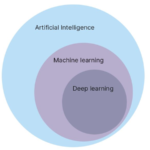



Artificial Intelligence (AI) is not limited to the laboratory or futuristic movies anymore. In fact, you are communicating with AI-powered systems in most instances of your daily life, and you are not even aware of it. Since AI has been utilized in smartphones and social media, in addition to navigation applications and online shopping, it significantly contributes to the faster, smarter, and personalized digital experience.
- 1. Voice Assistants (Siri, Alexa, Google Assistant)
- 2. Face Recognition on Smartphone.
- 3. Recommended Social Media Feeds and Content.
- 4. Search Engines (Google, Bing)
- 5. Navigation and Maps (Google Maps, Waze)
- 6. Online Web Shopping Recommendations.
- 7. Email Spam Filters
- 8. Streaming Solutions (Netflix, Spotify, YouTube).
- 9. Customer Support Chatbots
- 10. Smart Home Devices
In this article we explore the 10 best real life examples of artificial intelligence that you interact with every day and how AI is being silently implemented in your life.
1. Voice Assistants (Siri, Alexa, Google Assistant)
The most visible use of AI in daily life is voice assistants. They rely on natural language processing (NLP) and machine learning in order to understand voice commands and be intelligent in responding.
Common uses include:
- Setting reminders and alarms
- Answering questions
- Mechanism control of smart homes.
- Sending text messages and placing calls.
With time, these AI assistants get to know the preferences of the users and become more accurate.
2. Face Recognition on Smartphone.
Facial recognition technology is a technology that is based on computer vision and deep learning to identify and authenticate users.
Where you see it daily:
- Unlocking smartphones
- Banking and payment apps
- Social media photo tagging.
The use of AI ensures that it analyzes facial features and compares them with the stored data, and authentication is quick and secure.
3. Recommended Social Media Feeds and Content.
Applications such as Instagram, Facebook, Tik Tok, and LinkedIn are very dependent on AI-based algorithms.
AI helps by:
- Managing individual news feeds.
- Referral of friends or contacts.
- Prescription of videos and posts.
- Detection of bad or spam.
These systems analyze your behavior, likes, shares, and watch time to predict what you’ll engage with next.
4. Search Engines (Google, Bing)
The next time you search the Internet, AI operates in the background to provide you with the appropriate results.
The AI search engines are utilized in:
- Understanding search intent
- Ranking web pages
- Predicting search queries
- Offering snippets and voice search results.
Machine learning models are constantly improving the accuracy of search depending on the interaction with the user.
5. Navigation and Maps (Google Maps, Waze)
The AI-based navigation application assists millions of users to get to places in an efficient way.
Key AI features include:
- Online traffic forecasting.
- Optimal route suggestions
- Roadblock and accident detection.
- Calculated times of arrival.
These applications examine large volumes of real-time and historical information to enhance travelling experiences.
6. Online Web Shopping Recommendations.
AI-based recommendation systems on e-commerce websites such as Amazon and Flipkart are used to drive more user adoption and purchases.
Examples of AI in e-commerce:
- Product recommendations
- Personalized homepages
- Dynamic pricing
- Inventory forecasting
AI analyzes browsing history, purchase behavior and preferences to recommend products of interest.
7. Email Spam Filters
Machine learning is applied to email services to prevent spam, phishing and malicious content to its users.
AI-powered spam filters:
- Analyze email patterns
- Detect suspicious links and attachments
- Learn based on user action (marking spam or safe eMails)
Consequently, inboxes are kept clean and safe with minimal manual work.
8. Streaming Solutions (Netflix, Spotify, YouTube).
The AI recommends specific content to individuals based on their preferences via personalization of entertainment.
How AI enhances streaming:
- Recommendations of movies, shows or songs.
- Creating personalized playlists
- Ranking the content in terms of tastes.
- Performing better content discovery.
The systems are constantly learning as a result of watching the viewing pattern and listening pattern.
9. Customer Support Chatbots
Chatbots are common in websites and mobile applications that are powered by AI to offer on-demand assistance.
Chatbots can:
- Ask and answer question frequently asked questions.
- Order and returns support.
- Provide 24/7 customer service
- Rerouting complexes to human agents.
They apply NLP and machine learning to learn user queries and refine them as time goes by.
10. Smart Home Devices
The smart home technologies are based on AI and are used to automate and optimize everyday routines.
Common AI-powered smart devices include:
- Smart thermostats
- Smart lights
- Security cameras
- Smart speakers
AI acquires the habits of the users and changes the settings to maximize comfort and use of less energy.
Why AI in Everyday Life Matters
Artificial Intelligence improves daily life by offering:
- Convenience and automation
- Personalized experiences
- Better security and safety.
- Time and cost efficiency
- Smarter decision-making
Due to the constant development of AI, it is only going to become more applicable in our daily lives.
Conclusion
Artificial Intelligence is not only integrated into your contemporary life, but it shapes how you browse the Internet and how you drive to your destination to how you purchase goods, interact with others, and watch shows. These practical cases of AI demonstrate that AI is not a far-off place of existence, it is already with us, silently making our daily experiences better.
Understanding how AI works in daily life helps build trust, awareness, and smarter use of technology in an increasingly AI-driven world.