


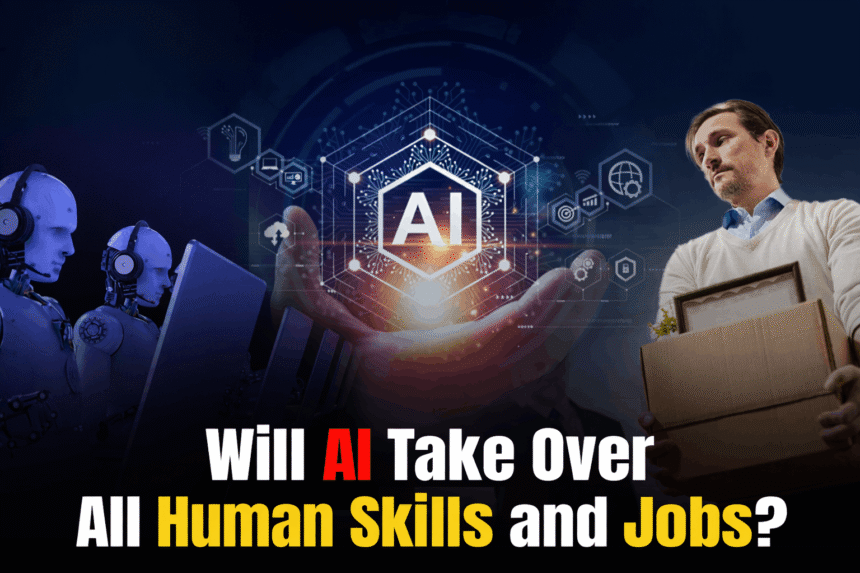
AI is developing rapidly – and with each new AI product, the same question is asked again and again:
Is AI going to replace entry level technology jobs?
This is a legitimate concern to you, should you be a student or a fresher, or you are even looking to have a career in the tech industry. The headlines can make one think that AI is stealing all. The truth is however a shade more complex.
Let’s take a clear, realistic, and beginner-friendly look at what’s actually happening.
We shall now give a naked, practical, and amateurish, examination of what is really going on.
Why Entry-Level Tech Jobs Feel Most at Risk
The first jobs to be mentioned when automation is mentioned are normally entry level jobs. The reason is that most of these jobs are characterized by:
Repetitive tasks
Rule-based processes
Basic analysis or execution
Following predefined instructions
Examples include:
Junior developers
QA testers
Data entry or basic data analysis roles
IT support and helpdesk positions
Content moderation or basic content writing
Artificial intelligence is highly efficient in performing systematic and consistent tasks, and that is why individuals believe that these functions are losing their positions.
What AI Can Already Do Well
Yes, to be realistic, AI is capable of executing part of tasks, which were once performed by entry-level professionals.
1. Code Assistance
AI can:
- Write basic code snippets
- Fix simple bugs
- Suggest improvements
- Generate boilerplate code
This minimises the level of manual work the juniors usually begin with.
2. Testing & QA Automation
AI-powered tools can:
- Run automated test cases
- Detect common errors
- Simulate user behavior
The effect is particularly felt on manual testing jobs.
3. Data Processing
AI can quickly:
- Clean datasets
- Identify patterns
- Generate summaries
The work that could take hours before junior analysts could complete is now done within minutes.
4. Technical Support Bots
AI chatbots can handle:
- Common troubleshooting queries
- Password resets
- Basic system guidance
This saves the entry level IT support teams work.
What AI Cannot Fully Replace (Yet)
This is where the story usually overlooks the AI will take all the jobs.
1. Contextual Understanding
AI struggles with:
- Business context
- Edge cases
- Ambiguous requirements
Asking questions, clarifying the needs, and adapting are the things that entry-level employees learn to do frequently, which AI is yet to cope with.
2. Critical Thinking
AI is capable of proposing solutions but in the real-life essence, it has no idea of the consequences.
Humans can:
- Question assumptions
- Challenge incorrect outputs
- Apply judgment
These are the necessary skills in technology setups.
3. Learning & Growth Potential
Not only is it not only output that matters in the entry-level positions; but it is also training future professionals.
AI cannot:
- Grow into a senior architect
- Mentor others
- Take ownership of long-term systems
People capable of evolving are still needed in organizations.
4. Human Collaboration
Tech work involves:
- Team discussions
- Client communication
- Cross-functional collaboration
AI technologies are helpful, yet they do not eliminate human teamwork.
Are Entry-Level Jobs Disappearing or Changing?
The more accurate answer is: they are changing, not disappearing.
Instead of removing entry-level roles, AI is reshaping them.
Before AI
- Manual execution
- Learning through repetitive tasks
- Limited decision-making
After AI
- Working alongside AI tools
- Reviewing and improving AI output
- Focusing on logic, quality, and problem-solving
- Faster learning curves
Most of the time, AI eliminates the tedious aspect of the work, rather than the position.
New Skills Entry-Level Tech Professionals Need
AI sets the pace higher – but it opens new opportunities.
In order not to become irrelevant, beginners should pay attention to the following:
1. AI Literacy
You don’t need to build AI models, but you should:
- Understand how AI tools work
- Know their limitations
- Get to know how to engage and lead them.
2. Problem-Solving Skills
Instead of “How do I do this task?”, the question becomes:
- “Is this solution correct?”
- “Does this meet real-world needs?”
3. System Thinking
It is more crucial to know the way various components of a system are interconnected than to memorize syntax.
4. Communication Skills
It is not yet possible to explain technical concepts articulately using AI, at least in business.
Industries Where Entry-Level Roles Are Still Strong
AI adoption is uneven. Human talent is still in great demand in many areas:
- Cybersecurity (heavy work judgment)
- Cloud and infrastructure management.
- AI governance and ethics
- Technological positions in products and UX.
- Technology unique to the industry (healthcare, safety, finance).
In this case, the entry-level jobs are changing- but not vanishing.
Should Beginners Be Worried?
Concern is natural—but panic is unnecessary.
All significant technological changes have led to such anxieties:
- Computers replacing clerks
- Internet killing traditional jobs.
- Robots taking over factory laborers.
In fact, the jobs were transformed and new ones appeared.
AI is no different.
Those who:
- Learn how to work with AI
- Adapt their skills
- Focus on thinking, not just execution
will remain up-to-date and demanded.
A Practical Way to Think About AI and Jobs
Instead of asking:
“Will AI replace my job?”
A better question is:
“What does AI mean to my position and what can I do with it to become faster?”
The future is that AI is a career quickening agent to its adopters.
Final Thoughts
So, can AI replace entry-level tech jobs?
Yes, partially–at the task level.
Partly, no–at role level.
AI will be able to automate repetitive labor, however, it will also:
- Develop smarter entry-level positions.
- Speed up learning
- Ask novices to think better.
To anyone in the tech world today, the future does not involve the competition against AI, but rather learning to cooperate with it.
And that’s not a dead end.
That’s an upgrade. 🚀